Ask any Pakistani cook why the salan tastes so good and oil will be part of the answer. Bhunai, tarka and the shiny layer of oil on top of a karahi are part of our food culture. But many families are now trying to cut down. Doctors regularly talk about heart disease and diabetes in Pakistan, and cooking oil and ghee prices have climbed sharply in recent years. Using less oil is good for health and for the monthly budget, and it does not have to mean bland food.
Why we use more oil than we think
Most home cooks pour oil straight from a large bottle or tin. It is almost impossible to judge the amount that way. A "little" oil can easily be half a cup. Heavy tins are also hard to control, so oil splashes and drips down the side, making shelves greasy. Measuring is the single most effective habit for cutting oil.
What an oil dispenser does
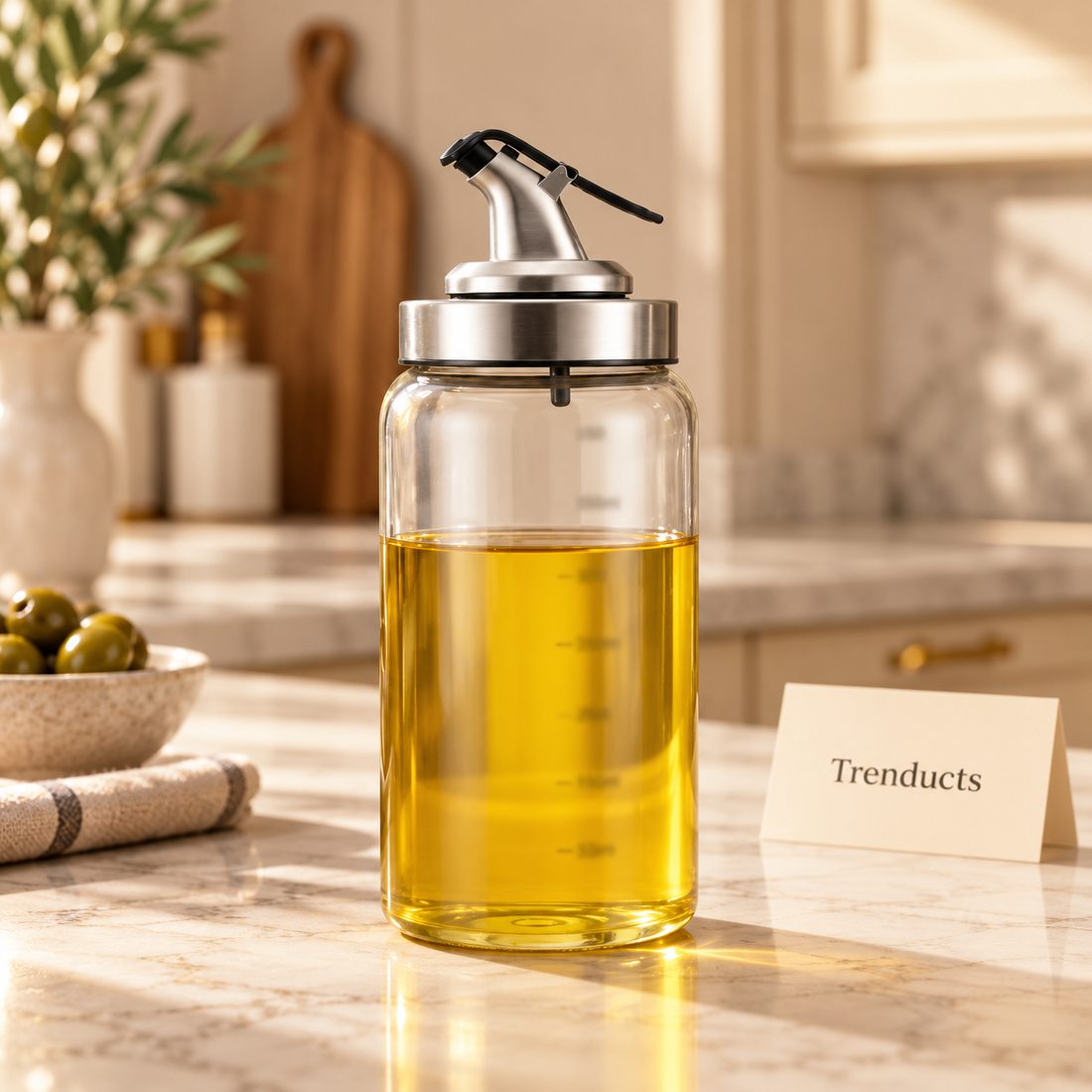
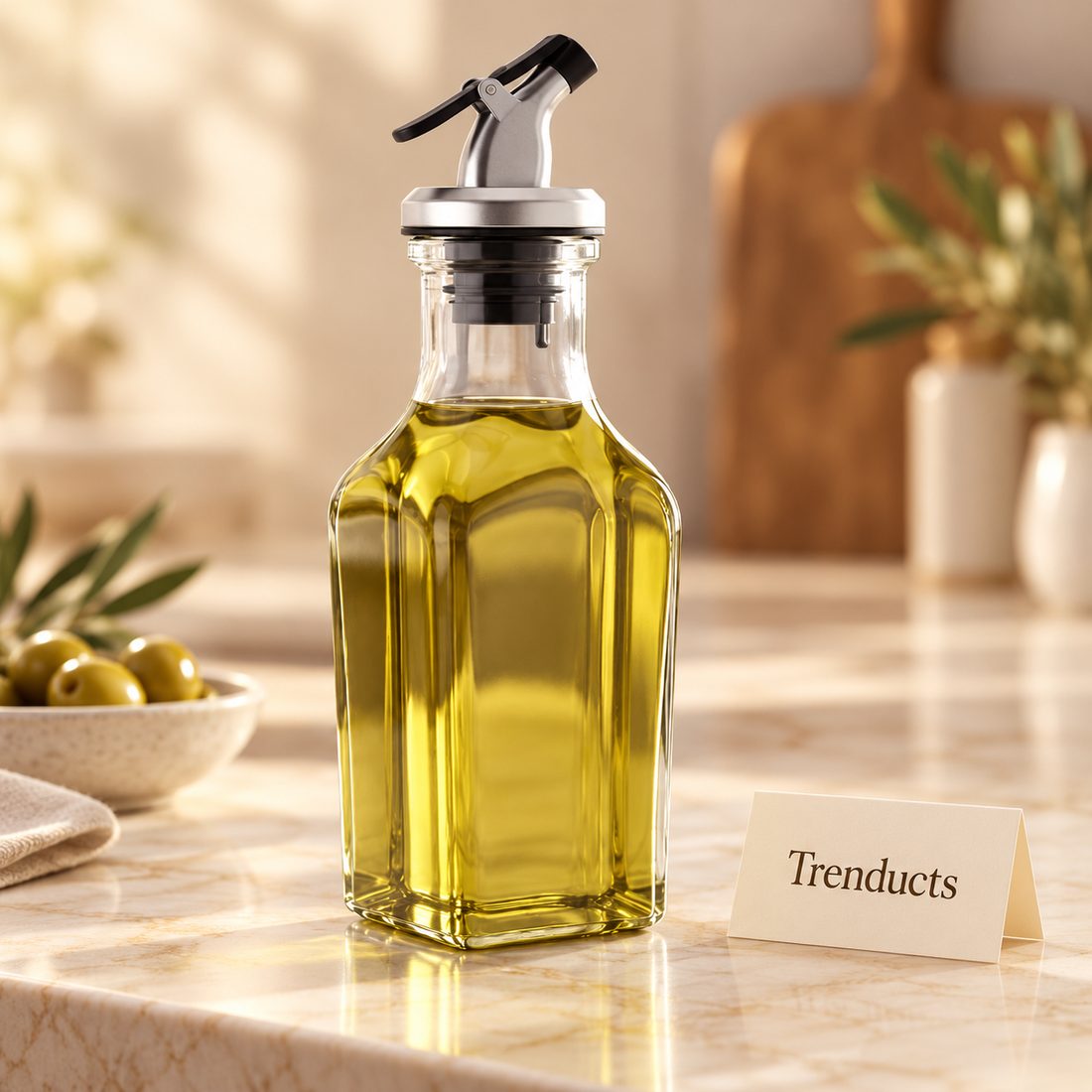
An oil dispenser is a smaller bottle, often glass, with a narrow spout that controls the flow. You fill it from the big tin once a week and use it for daily cooking. The benefits are simple:
- A thin, steady stream means you pour less and stop exactly when you want
- Many dispensers have measuring marks, so you can see how much you have used
- The big tin stays closed in the cupboard, away from light and air
- No more greasy rings on the shelf or slippery hands
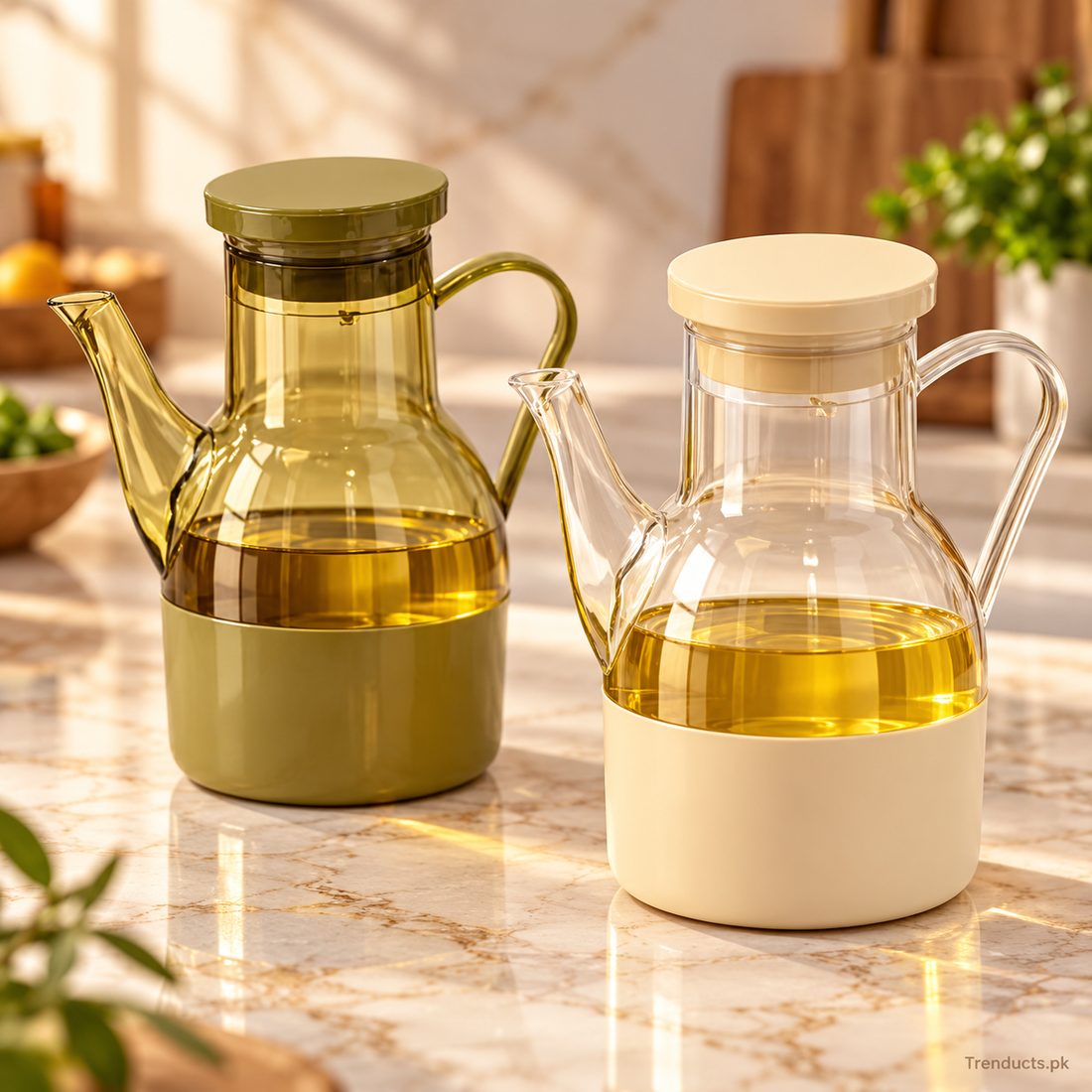
Glass is easy to clean and does not react with oil. Choose one with a drip-free spout and a handle if you have a busy kitchen.
How much oil does a dish really need?
For a family-sized salan of chicken or vegetables, many cooks find that three to four tablespoons is enough for proper bhunai, instead of the half cup often used. Start by reducing your usual amount by a quarter. Most families do not notice the difference. After a few weeks, reduce again. Use the measuring marks on your dispenser to note what works.
Cooking techniques that need less oil
- Bhuno on medium heat with the lid partly on; the steam helps cook the masala so it needs less oil
- Add a splash of water when masala sticks instead of more oil
- Use a heavy-bottomed or non-stick pan so food does not catch
- Make tarka in a small pan with one tablespoon of oil instead of adding oil to the whole pot
- Skim excess oil off the top of a finished salan and save it for the next tarka
- Bake or air-fry pakoras and samosas sometimes instead of deep frying
Which oil to use
Different oils suit different jobs. Canola and sunflower oils are commonly used for everyday cooking. Olive oil is good for salads and light cooking. Desi ghee has a strong flavour, so a small amount at the end of cooking gives taste without using a lot. Keep separate dispensers for each oil and label them so nobody mixes them up.
Storing oil properly
Light and heat make oil go stale and develop an unpleasant smell. Keep your dispenser away from the stove top and out of direct sunlight. Refill it only when it is almost empty, and wash it every few refills with hot soapy water, drying it fully before filling again. Old oil left at the bottom can turn rancid and spoil the new oil.
Deep-fried oil: reuse carefully
Reusing frying oil many times is common, but oil that has turned dark, smells burnt or foams should be thrown away. Strain used oil through a fine sieve and keep it in a separate labelled bottle, using it only once or twice more.
Small change, big difference
Cutting a few tablespoons of oil a day across a family adds up to litres every month. If you want to try this habit, a glass oil dispenser with measuring marks is an inexpensive start. Trenducts.pk also stocks other kitchen helpers, from spice jars to storage containers, if you are reorganising your cooking area.
Good desi food depends on spices, patience and technique. With a little measuring, it can be both tasty and lighter.